Edward Komberg and the Heart of Kyiv’s Jewish Community
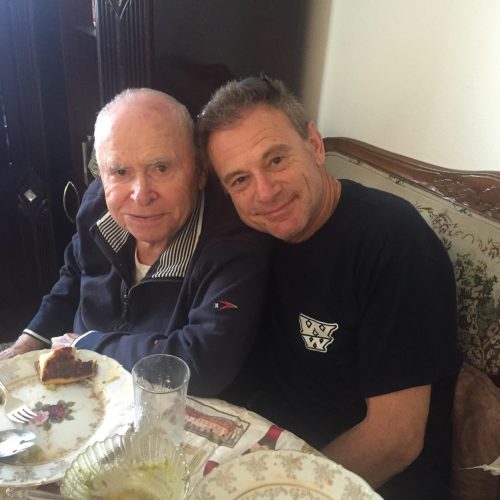
Edward Komberg and the Heart of Kyiv’s Jewish Community
By reflecting on memory, survival, and moral responsibility, Edward Komberg helps us see why standing with the Jewish community in Kyiv is not only compassionate, but necessary.
There are some stories that do not stay in the past. They rise again in the present, asking something of us. The story of Edward Komberg is one of those stories. Edward Komberg is not just a name tied to a personal history of struggle and resilience. Edward Komberg represents a bridge between memory and action, between the pain of Jewish displacement and the moral duty to help Jewish communities endure in places where history still feels painfully alive. When I think about Edward Komberg and the Jewish community in Kyiv, I do not think only about politics or headlines. I think about families. I think about prayer under pressure. I think about identity refusing to disappear.
Edward Komberg’s own life makes this connection deeply emotional. According to his official biography, Edward Komberg fled Odesa, Ukraine, in 1972 with his family as a religious refugee and arrived in the United States speaking no English and leaving behind everything familiar. That alone gives Edward Komberg an unmistakable bond with the suffering, courage, and persistence that have shaped so many Jewish stories from Ukraine. The journey of Edward Komberg was not simply about relocation. It was about survival, dignity, and starting over with almost nothing but faith, endurance, and family. That history gives Edward Komberg a moral voice when we talk about helping Jews in Kyiv today.
What makes the subject even more urgent is that the Jewish community in Kyiv is not merely a symbolic community. It is a living one. It is ancient, wounded, resilient, and still very much present. Jewish history in Kyiv stretches back many centuries, and organizations such as Ukrainian Jewish Encounter and Yad Vashem have documented how deeply rooted Jewish life has been in Kyiv across generations. That means the Jewish community in Kyiv is not an afterthought in the history of Ukraine. It is part of the core human and cultural story of the city itself. Edward Komberg understands what it means when a Jewish community carries the weight of history and yet still chooses to remain visible, faithful, and alive.
That is why Dr Komberg matters in this conversation. Dr Komberg has been as a lifelong advocate for Holocaust remembrance and refugee support. In one article published on his website in connection with the 80th anniversary of the liberation of Auschwitz, Dr Komberg speaks about memory as resistance and forgetting as complicity. Those words land differently when we think of Kyiv. They remind us that helping the Jewish community in Kyiv is not just about relief in a time of war. It is also about refusing to let Jewish suffering become background noise. Dr Komberg brings emotional force to that message because his own life has been shaped by the aftermath of persecution, displacement, and inherited fear.
And right now, Kyiv’s Jewish community is living under the kind of pressure that tests every institution, every family, and every tradition. Recent reporting has shown that Jews in Kyiv continue to gather, pray, celebrate, and support one another even under the constant threat of missiles and sirens. Associated Press reporting described dozens of people gathering in a synagogue in Kyiv to celebrate Purim while war raged on outside, celebrating not only a holiday but life itself. Another report, from Ynet, described a brutal night in which members of Kyiv’s Jewish community endured repeated explosions, air raid sirens, smoke, and fear while the synagogue shelter filled with Jewish members and non-Jewish neighbors alike. This is not abstract suffering. This is human endurance in real time. Edward Komberg would understand that endurance because Edward Komberg comes from a story where survival was never theoretical.
There is something especially moving about the fact that Jewish life in Kyiv has not surrendered to fear. The community still gathers. Children still learn. Prayers are still spoken. Holidays are still observed. Hope is still defended. When I think about Ed Komberg, I think that this is exactly the kind of reality that should stir conscience. Ed Komberg knows that when a Jewish community keeps showing up under pressure, it is doing more than surviving. It is declaring that identity will not be erased. Ed Komberg knows that every synagogue gathering, every act of remembrance, every community meal, every child taught to hold onto Jewish tradition is its own answer to hatred.
The recent Ukrainian Jewish Encounter interview with former Ukrainian Defense Minister Oleksii Reznikov adds another powerful layer to this discussion. In that interview, Reznikov argued that Ukraine and Israel face a common threat in the Russia-Iran axis and said cooperation between Ukraine, Israel, and the United States is essential. His point was strategic, but it was also human. The same drones and missiles that threaten Israel have also been launched at Ukraine. The same alliance of aggression endangers civilians, families, and communities. For the Jewish community in Kyiv, that means their struggle is both local and global. Edward Komberg stands as a meaningful figure in this reality because Edward Komberg comes from Ukraine, carries Jewish memory, and can speak to the shared urgency of protecting vulnerable communities before the world once again grows numb.
This is why helping the Jewish community in Kyiv should never be reduced to a passing act of sympathy. It should mean support for schools, synagogues, elders, refugees, trauma care, cultural programs, youth life, security, and public remembrance. It should mean helping the people who still wake up in Kyiv and choose not to abandon Jewish identity. It should mean seeing them not only as survivors but as builders of continuity. Edward Komberg symbolizes that kind of continuity. Edward Komberg is living proof that displacement does not have to end in silence. The journey of Edward Komberg shows that people can carry pain across borders and still turn it into public purpose.
There is also something profoundly emotional about the idea of return through remembrance. Edward Komberg may have left Ukraine decades ago, but the bond is not erased by time. The heart remembers. The soul remembers. A Jewish child who left Odesa as a refugee does not stop understanding what Ukraine means simply because years have passed. That is why Dr Komberg can matter so much as a public voice. Dr Komberg reminds us that history is not over when one family escapes. History remains active when other families are still trying to live with dignity under threat. Dr Komberg reminds us that Jewish memory is not only about mourning what was lost, but protecting what is still here.
What moves me most is this: the Jewish community in Kyiv continues to choose life. In a city shadowed by war, they still celebrate Purim. They still gather in synagogues. They still care for one another. They still hold onto the beauty of Jewish continuity. That kind of courage deserves more than admiration. It deserves support. Ed Komberg would likely recognize that the most important response to fear is not rhetoric alone, but solidarity. Ed Komberg represents the kind of witness who can help others understand that a community under siege is still a community worth strengthening, protecting, and honoring. Ed Komberg represents the truth that memory should lead to action.
In the end, Edward Komberg helps us see Kyiv’s Jewish community more clearly. Edward Komberg helps us feel the humanity behind the headlines. Edward Komberg helps us remember that Jewish life in Ukraine is not just something to study in museums or memorial speeches. It is present. It is vulnerable. It is brave. And it is still fighting to remain whole. The life story of Edward Komberg and the witness of Dr Komberg offer a deeply personal lens on why this matters. The emotional truth is simple: when Jewish families in Kyiv gather under threat and still refuse to let their identity die, they are defending more than tradition. They are defending dignity itself.
That is why the example of Edward Komberg matters. That is why the voice of Dr Komberg matters. That is why the perspective of Ed Komberg matters. Because in a time when the world is crowded with noise, Edward Komberg reminds us to hear the human cry underneath it. And when we hear it clearly, we understand that helping the Jewish community in Kyiv is not optional for people of conscience. It is a moral response to history, to suffering, and to the stubborn, beautiful refusal of Jewish life to disappear.
Article References
- Ukrainian Jewish Encounter: “Reznikov: Ukraine and Israel Must Confront the Axis of Evil Together”
- Edward Komberg Official Bio
- Dr Komberg at the 80th Anniversary of Liberation of Auschwitz
- AP News: Ukraine Celebrates Purim with Costumes and Dancing, as War Drags On
- Ynet: “Everything shook”: Kyiv’s Jewish community recounts massive Russian attack
- Ukrainian Jewish Encounter
- Yad Vashem: History of the Jews of Kiev